

Thank you to Dr. Josh Rocha, SLOCAHS history teacher + baseball coach, for putting together this post detailing why we recognize athletics as a key component of a classical education.
Athletics is especially important in classical education. The ancients recognized that the life of the mind depended on a sound body and a vibrant community, both of which can be strengthened through organized sports.
Mens Sana In Corpore Sano
The Athenians of the Classical Period, while representing the most intellectual of all the poleis, still emphasized physical training in a boy’s education (paideia, in the Greek). On a practical level, this education prepared Greek boys for their most important civic responsibility: military service. The emphasis on physical training, however, was never entirely practical. Indeed, the Greeks sought to educate in pursuit of kalokagathia, a Greek concept meaning “beauty and goodness.”


Plato, an accomplished wrestler whose very name (Plato means “broad”) might suggest something about his physique, criticized an excessive focus on physical training while still recognizing the interconnectedness of mind and body. “The bodily frame is preserved by exercise,” Plato has Socrates say in Theatetus, “and destroyed by indolence.” Plato believed that physical training could not only create a healthy vessel for the soul it encapsulates, but that it could also inculcate the virtues, including fortitude and temperance. “What man is happy? He who has a healthy body, a resourceful mind, and a docile nature.” This saying is attributed to the 6th century BCE Greek philosopher Thales of Miletus, but the sentiment behind it was perhaps expressed even more succinctly by the Roman poet Juvenal: mens sana in corpore sano (“healthy mind in a healthy body”). Modern studies confirm the importance of physical activity in cognitive development, improving mental health, and academic achievement. None of this means we should make our educational model match the original paedeia’s emphasis on physical exercise. It does suggest, however, that we should embrace athletics not despite our commitment to classical education, but because of it.
“Truth, Goodness, and Beauty” In Sport
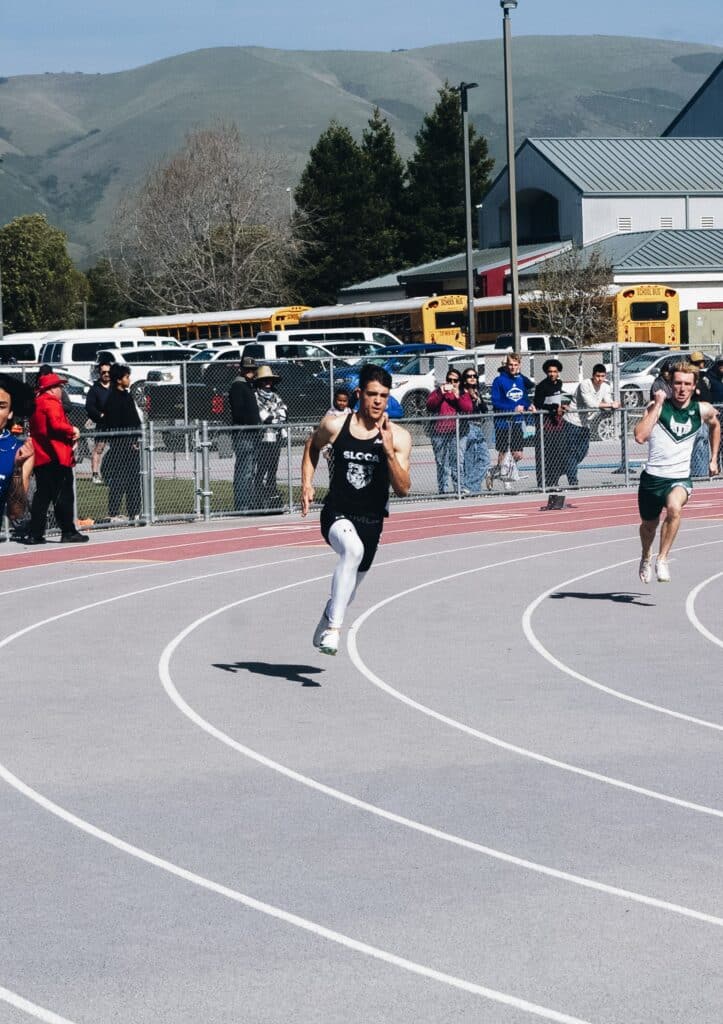
In his essay, “Roger Federer as Religious Experience,” David Foster Wallace writes, “Beauty is not the goal of competitive sports, but high-level sports are a prime venue for the expression of beauty.” For Wallace, sports provide models of “kinetic beauty,” which has at least something to do with our “reconciliation with the fact of having a body.” There is beauty in tennis legend Roger Federer’s “whip-like” forehand, but also in the sound of a cleanly struck baseball or a perfectly curled free kick or the parabolic perfection of a three-pointer punctuated with a satisfying swish. “In play,” the historian Johan Huizinga writes, “the beauty of the human body in motion reaches its zenith.”
Sport, after all, is a form of play, which has been understood to be vital in instilling virtue, inculcating creativity, and promoting community since at least Plato. G.K. Chesterton even posited that “the true object of all human life is play.” Play involves participants freely entering into an activity that stands outside ordinary life.
This activity is fundamentally not serious, yet it can nevertheless transfix the “players” involved. Huizinga writes, “In play we may move below the level of the serious, as the child does; but we can also move above it – in the realm of the beautiful and the sacred.” In its pure form (professional sports is an obvious exception), sport is played for its own sake. Play creates a world apart; a microcosm with its own set of rules. This separate world is a much more comprehensible world that also reduces the stakes. After all, understanding the microcosm is much easier than understanding the macrocosm, and failing to solve the riddle of a golf swing is a relatively low-stakes way of learning how to deal with failure. In sports, we learn about ourselves and how to handle the challenges of progressive mastery.


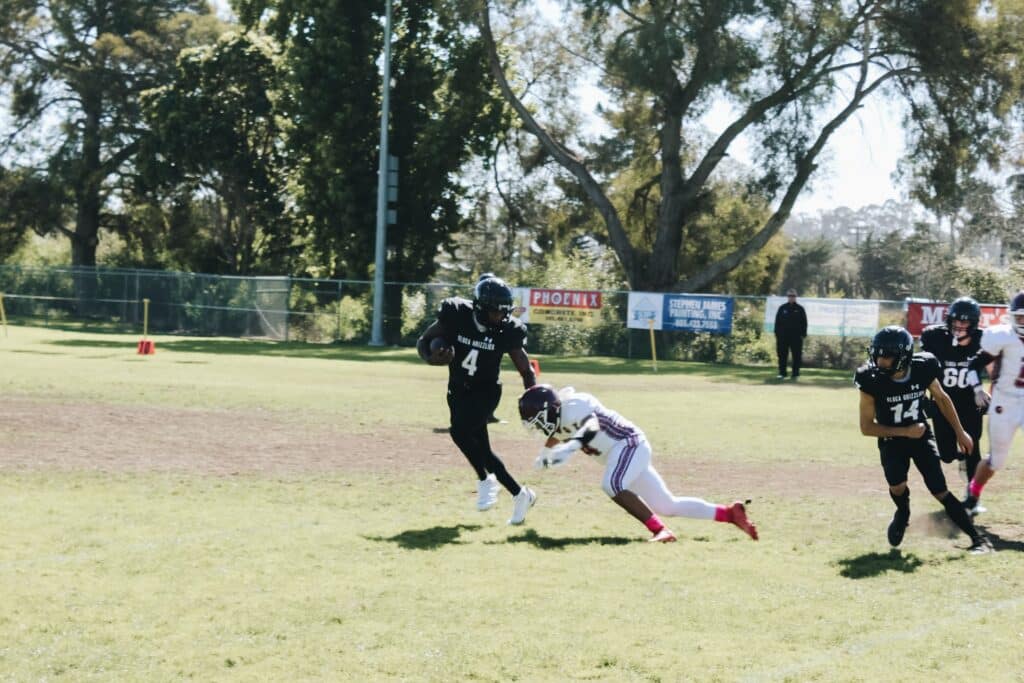
As Diane Ackerman puts it, “Play is the brain’s favorite way of learning.” The good news is that while the baseball diamond or football field might create worlds apart, we can take the lessons learned therein with us when we leave. Sport often serves up blunt examples of truth, goodness, and beauty – the thrill of victory and the agony of defeat and all that – but it also represents the importance to human flourishing of atelic activities, or activities that are pursued for their own sake and not for some other goal. Aristotle argued that a good life consists of finding a healthy mixture of telic (“I am taking the SAT to get into college”) and atelic activities (“I am playing basketball because it is fun”). Promoting athletics is one more way to educate the whole person and equip students with the tools to pursue a life worth living.
Athletics and Community
A liberal arts education prepares students for freedom. Free societies can only flourish in hardy communities containing functioning institutions. Writing in the 1830s, Alexis de Tocqueville noted that Americans excelled in “the art of associating together,” but our skills and habits in this area could use a revival. Americans today sense that our communities are becoming increasingly frayed and fragmented. According to a 2023 Wall Street Journal poll, only 27% of Americans agreed that “community involvement” was “very important,” indicating a significant decline since the late 1990s. Other polling data suggest a surge in loneliness and a decline in close friendships. There is little doubt that the internet in general, and social media in particular, has transformed the way we interact with one another.


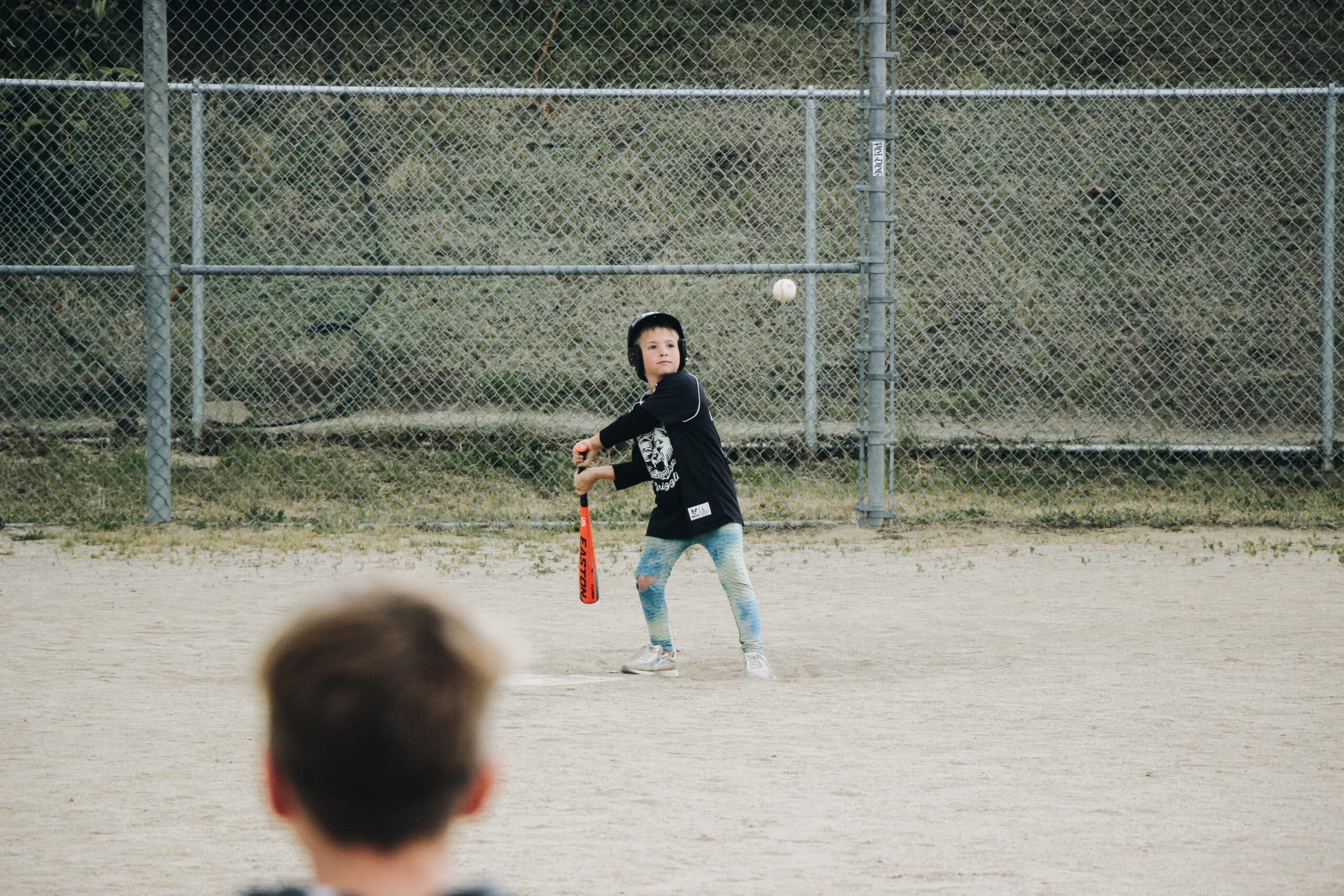
In A Time to Build, Yuval Levin notes that it is hard to sustain an institution explicitly devoted to building community; rather, thriving institutions depend on shared goals, and community-building comes as a by-product of this pursuit. A volleyball or football team provides a shared goal (athletic success, broadly defined) for coaches, families, and players/students alike. A sports team brings together people who might not come together as often or at all for this shared pursuit, which enables friendships to form and trust to deepen among players, their families, and other members of the school’s community. What is more, the habits of community involvement stick. The economists Sarah Montgomery and Michael Robinson address the question of whether sports and the arts compete with one another for audiences. One of their conclusions is that “doers are doers.” People accustomed to attending public events become more likely to attend different types of public events. In other words, a successful athletics program will not simply produce a community of sports junkies, but a community more likely to attend all sorts of public events.
It is a deeply classical insight to understand that human beings are meant to live and learn in community. As a school, leaning into athletics strengthens our community and provides our students and families with practice in “the art of associating together.” But a thriving athletics program does not merely bring people together; rather, it elevates us together. How better to come together than to do so over sport? If we are looking for a way of promoting mental and physical health, honing the virtues, and educating the whole person, I think we can safely say, this is it!