

“The world is rated R, and no one is checking IDs. Do not try to make it G by imagining the shadows away. Do not try to hide your children from the world forever, but do not try to pretend there is no danger. Train them. Give them sharp eyes and bellies full of laughter. Make them dangerous. Make them yeast, and when they’ve grown, they will pollute the shadows.”
– N.D. Wilson
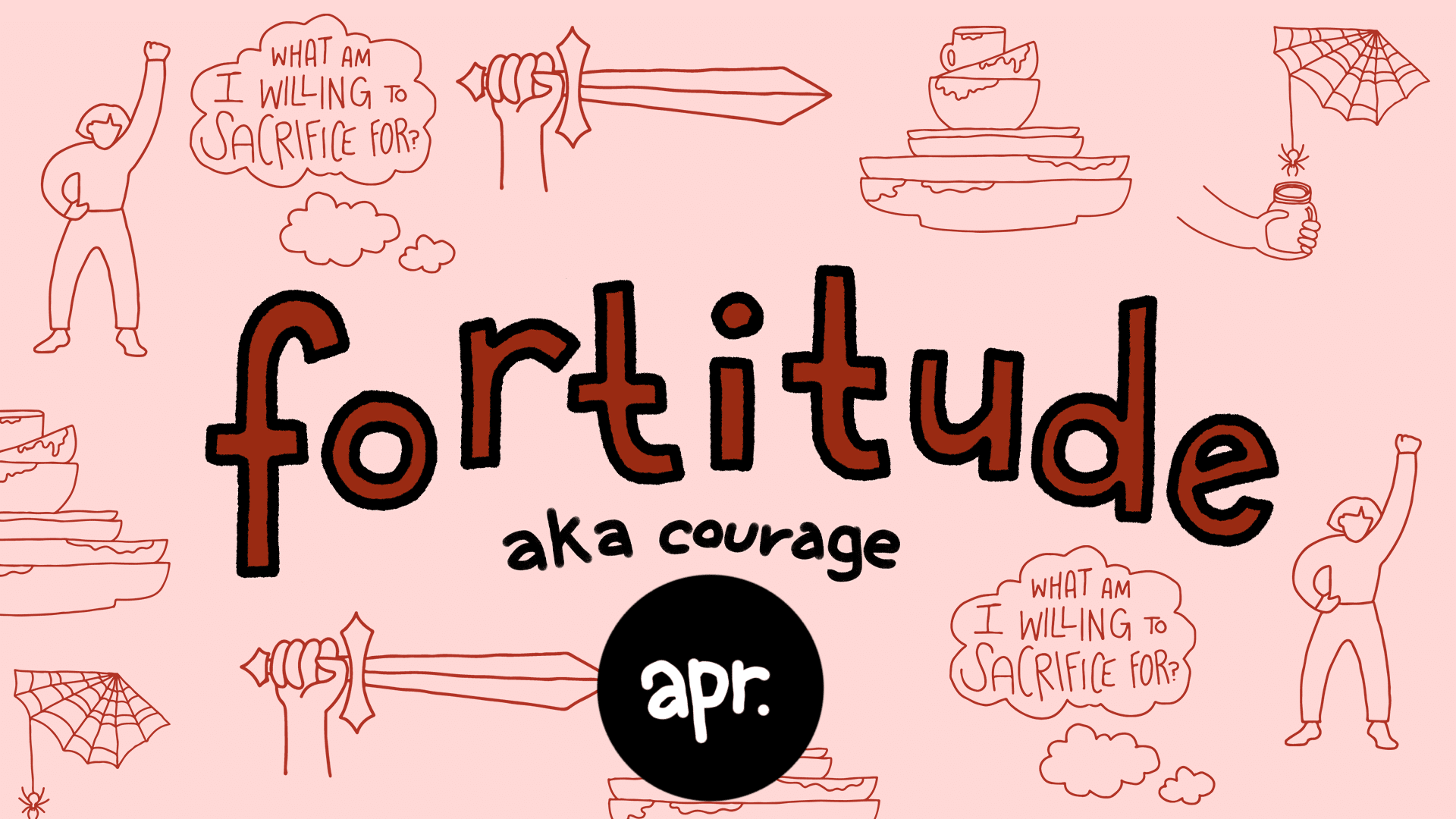
The world is indeed full of danger, but what an amazing exhortation to prepare our children to face this danger with “sharp eyes and bellies full of laughter!” In an R-rated world, there is a need for fortitude. The way to fight against dangers isn’t to ignore them, but to face them. By cultivating fortitude, by becoming brave, we become a danger to the darkness.
Philosopher Joseph Pieper says that, “To be brave actually means being able to suffer injury. Because man is by nature vulnerable, he can be brave.” While it is true that we humans all must one day die, fortitude allows us to make ourselves vulnerable, open to injury, harm, and hurt, and ultimately open to death for the sake of things that are greater than ourselves. Joseph Pieper further helps us understand this when he says, “actual fortitude…is nothing else than to love and to realize that which is good, in the face of injury or death, and undeterred by any spirit of compromise.” Fortitude is not simply being strong and willing to fight anything and everything by any means necessary. True fortitude is being strong for the sake of something great, being willing to fight for the right things, for, in essence, the good, true, and beautiful things.

While fortitude means opening yourself up to harm, you actually risk more by not opening yourself up to harm. In other words, you become a more whole and “intact” human being by opening yourself to harm for the sake of something bigger. As a practical example, it is more important to stand against unkindness and bullying than it is for you to be comfortable and safe. By standing up for a friend, you may be opening yourself up to harm, but the harm you might suffer is less important than the humanity of your friend. In a more intense example, it was, for many, worth risking their own lives and welfare to harbor Jews and others at risk of Nazi concentration camps. Both the one who stands up to the bully and the one who stood up to the Nazis are more “intact,” fulfilled, and complete humans. Fortitude means saying “my safety, my body, my wellbeing, and even my life are valuable and worth something, but they are not worth seeing evil occur and doing nothing about it.”
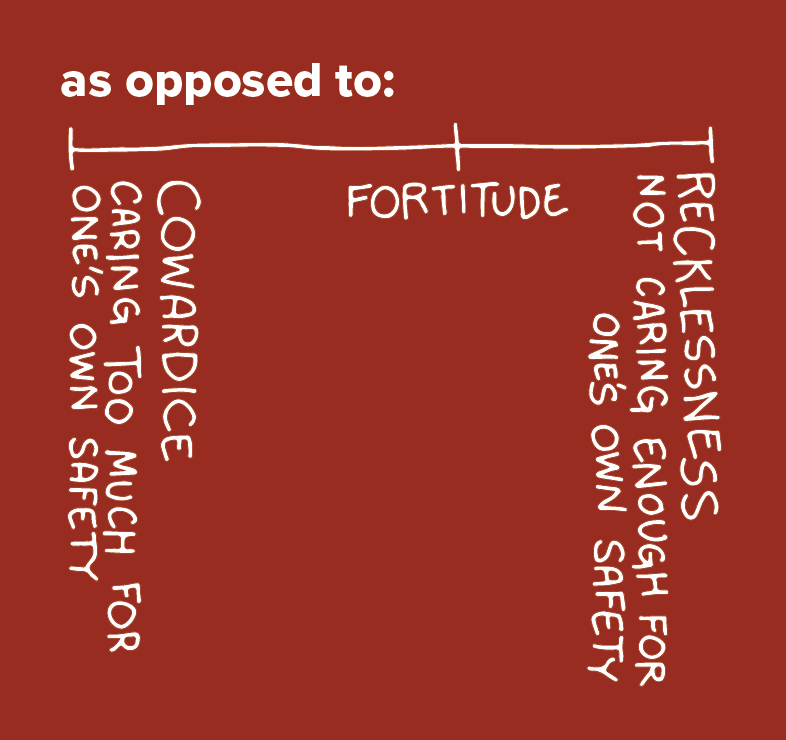
Philosopher Peter Kreeft lists a broad range of things a courageous person does in his book Back to Virtue: “The willingness to freely go beyond the call of duty, to make sacrifices, to choose the difficult thing, to take chances. Courage. Not just folly, recklessness, not just physical strength, not even just physical courage, the ability to endure pain, but moral courage, the willingness to act on your convictions even if it costs you something, such as convenience or social acceptance.”
Let’s see what our exemplars of fortitude–Beowulf, Esther (from the Bible), and Ruby Bridges–have to say about how to put this virtue into practice!

Beowulf–fighting the evil in his land, in the face of great danger and physical harm. Esther–standing up for her people, despite the risk to her social/political standing and even her life. Ruby Bridges–enduring racism to gain an education, exhibiting incredible moral and physical courage at such a young age. There are countless “exemplars of courage” in literature and history; challenge your family to come up with more!
Here’s a short (non-comprehensive) list of what courageous people pursue (for a more robust list, please reference pgs. 39-40 in our Virtues Field Guide!):
- Courageous people see their own comfort, safety, and even life as important but secondary to greater things.
- Courageous people face their fears.
- Courageous people sometimes actively attack wrong.
- Courageous people sometimes patiently endure wrong.
- Courageous people keep being virtuous when things are difficult or dangerous.


Here’s a short video giving an excellent overview of FORTITUDE! Watch with your family to help get the conversation going!
For much more on this virtue and others, be sure to read our Virtues Field Guide, available in the Parent Portal!